01 · ACCESS
Analyte Access Module
Collects the relevant body fluid and delivers it to the patch.

TECHNOLOGY · SIGNAL QUALITY STARTS AT THE SENSOR
Our microfluidic sensing concept creates room for larger active sensor surfaces. Signal quality starts at the sensor — a crucial foundation for detecting subtle molecular changes with miniaturised readout electronics. For biosensors in particular, we design the active area, fluid contact and electronics together to achieve high measurement resolution.
How measurement works ↓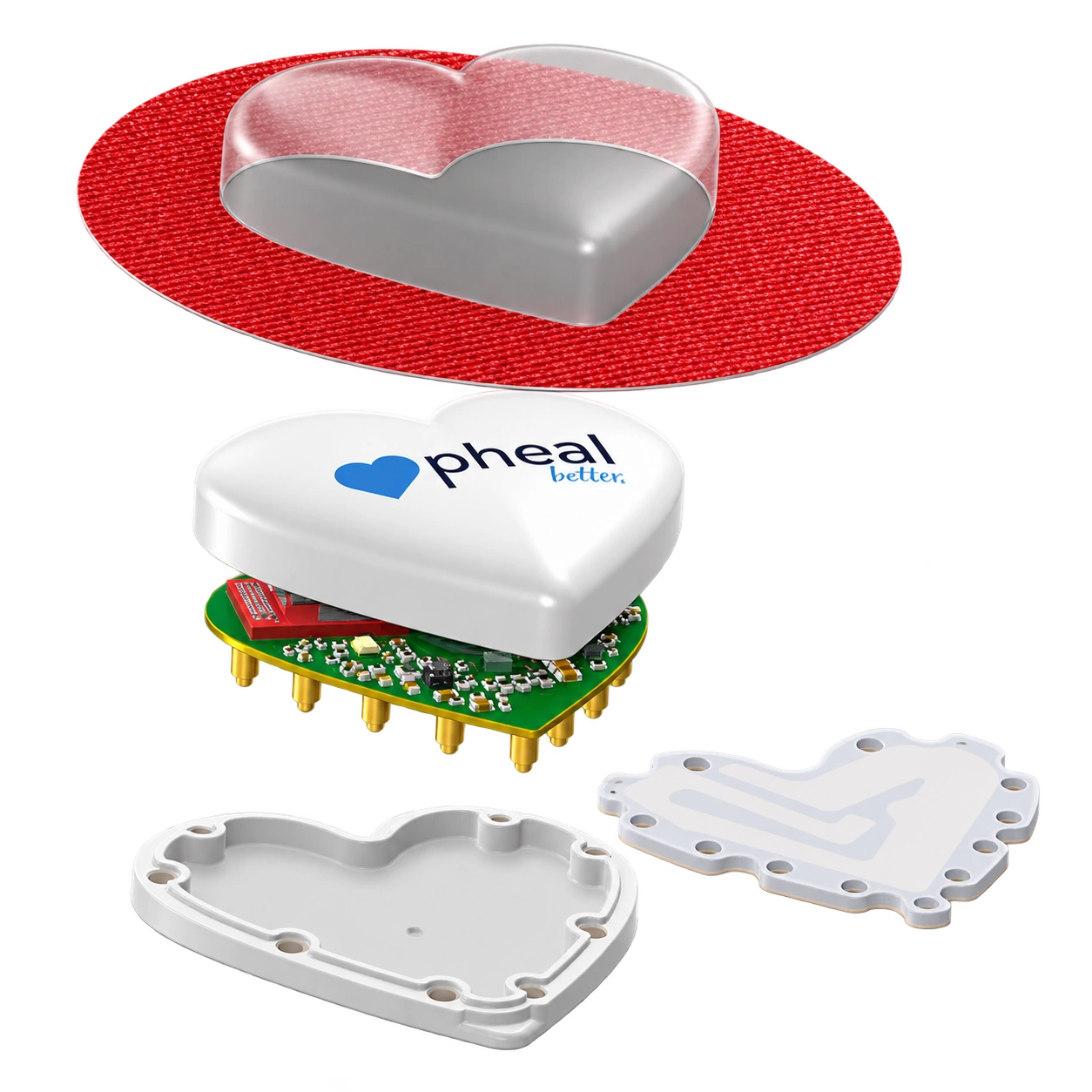
OUR APPROACH
We separate access to body fluid from the sensing surface itself. Sweat — and, in future, interstitial fluid (ISF) or capillary blood — is collected and transported into the patch through microfluidic structures.
The sample then reaches the working electrodes. The active sensor surfaces are in direct contact with the fluid. Molecular detection takes place inside the patch.
This architecture gives us the freedom to provide sufficiently large active sensing areas and guide fluid precisely. It also avoids placing the sensing electrodes themselves inside the skin as mechanically stressed measurement needles.
We design sensing area, sample contact and electrode layout together to support stable measurement conditions and high signal quality.
Access to body fluid is a separate engineering task. For ISF and capillary blood in particular, the skin-access method depends on the Access Module.
THE SAMPLE PATH
Microfluidics does not stop at the electrode. It guides body fluid through the measurement area and onwards into a reservoir that collects the fluid after sensing.
01 · ACCESS
Collects the relevant body fluid and delivers it to the patch.
02 · DELIVERY
Guides the sample to the active sensing surfaces.
03 · MEASUREMENT
Measure selected parameters in direct contact with the fluid.
04 · COLLECTION
Collects and stores fluid inside the patch after it passes through the measurement area.
Sample delivery, measurement and downstream collection are developed together. This allows us to account for the complete fluid path and the system's limited collection capacity.
SENSING PRINCIPLES
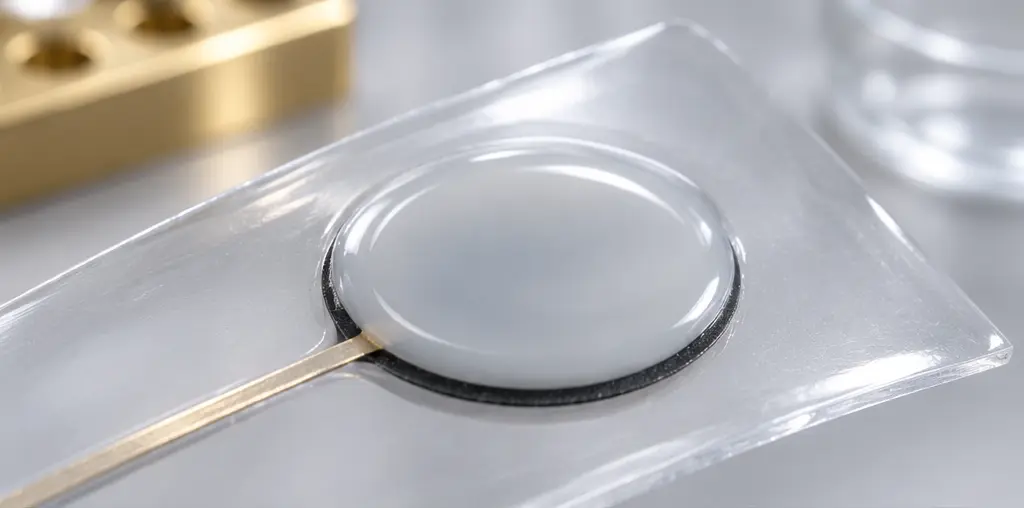
Illustration of the sensing principle
ION-SELECTIVE SENSORS
Ion-selective membranes enable the measurement of selected ions, for example sodium, potassium, ammonium, chloride or magnesium, depending on the Sensor Layer.
Ion-selective electrodes are typically read potentiometrically: the electrical potential relative to a reference electrode provides the measurement signal.
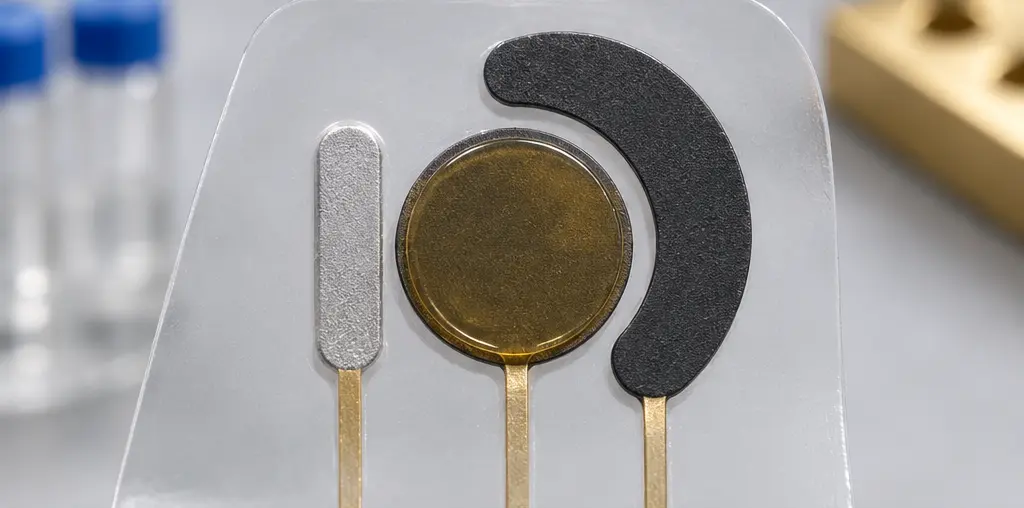
Illustration of the sensing principle
ENZYMATIC BIOSENSORS
Enzymatic detection principles enable the measurement of additional molecules, such as glucose, lactate or uric acid. The corresponding reaction is detected electrochemically.
Sensors and suitable parameter combinations are developed and validated for each application.
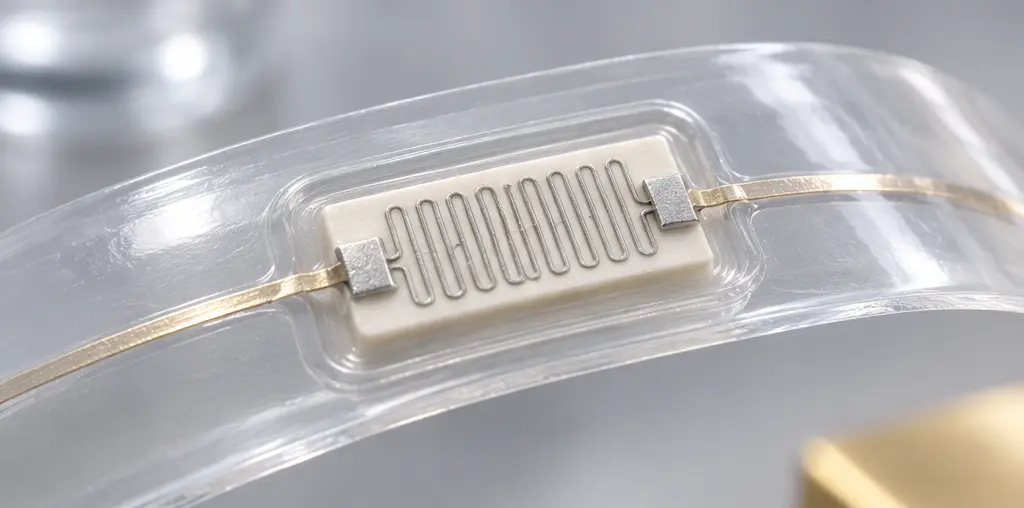
Illustration of the sensing principle
PHYSICAL SENSING
Complementary physical sensors provide information about temperature and fluid within the system. They help us interpret molecular signals in the context of the actual measurement conditions.
We consider the sensing response, sample condition and operating state together.
Depending on the sensing principle, potentiometric, amperometric, voltammetric or coulometric approaches may be used. These evaluate electrical potentials, currents, current–voltage relationships or electrical charge recorded over time. The measurement method is selected for the specific sensor.
MEASUREMENT QUALITY NEEDS CONTEXT
TEMPERATURE
Integrated temperature sensing provides a basis for sensor-specific temperature compensation. The influence of temperature on the measurement signal is taken into account during analysis.
WETTING & MEASUREMENT READINESS
Fluid detection indicates whether body fluid has reached the measurement area and wetted the sensing surfaces. This supports the assessment of measurement readiness; the required stabilisation of the sensor signals is also taken into account.
RESERVOIR & SATURATION
Fill-level detection monitors the fluid reservoir. It indicates when the reservoir is full or its collection capacity has been exhausted and replacement is needed.
TWO LIFECYCLES · ONE SYSTEM
The sensors remain in direct contact with body fluid during wear. The Sensor Layer is therefore a single-use component: it is replaced after the intended period of use or when fluid capacity has been reached.
Wear periods of, for example, seven days or a future target of fourteen days are designed and validated for the specific application. They are not a universal use period for every sensor variant.
The rechargeable Heart Device remains in use. Separating the consumable from the electronics helps avoid repeatedly discarding complete electronic devices and reduces electronic waste.
ONE PLATFORM · DIFFERENT ACCESS ROUTES
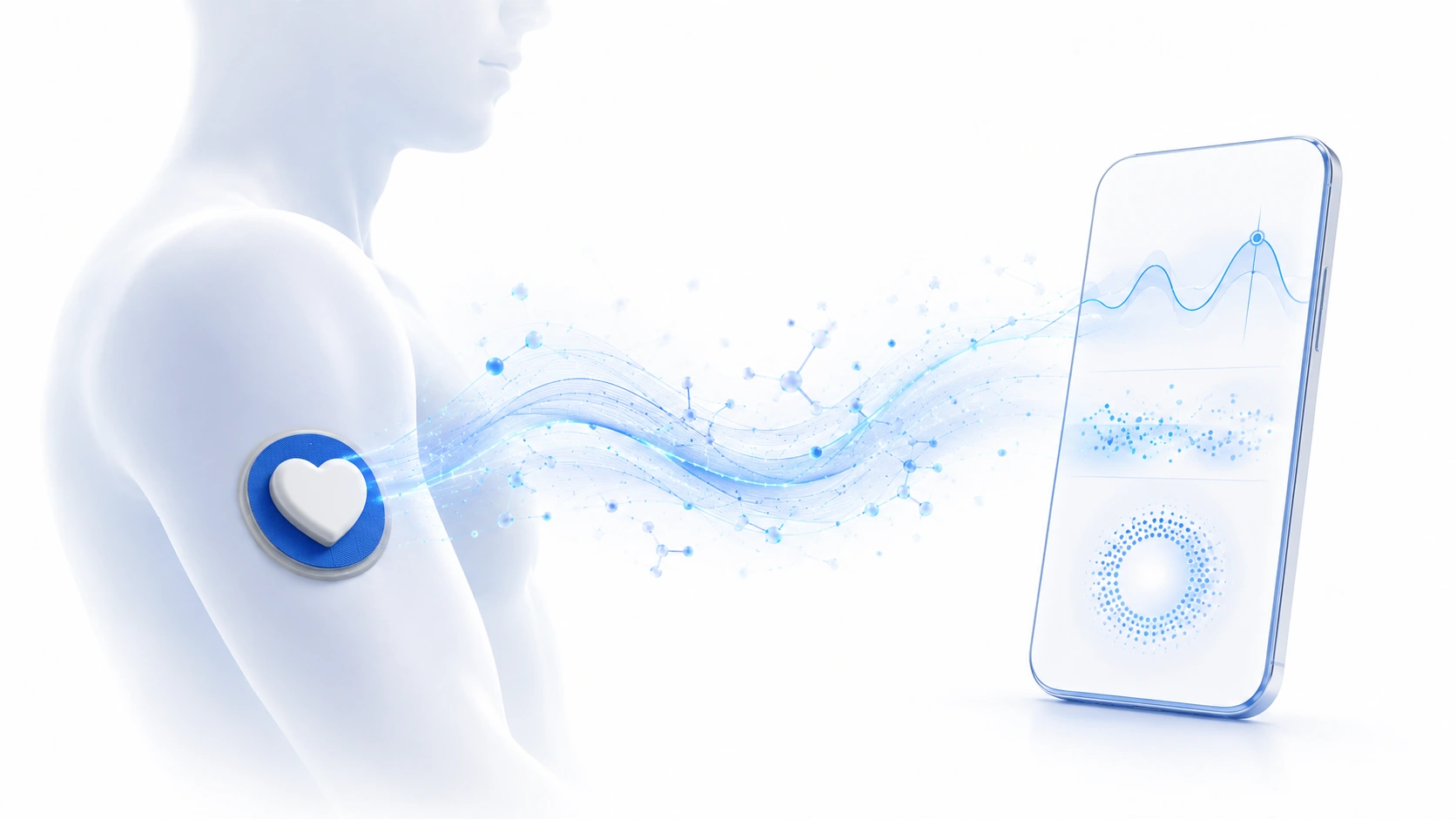
The Access Module provides the sample interface. The Sensor Layer determines which parameters are measured. The Heart Device controls measurement and transmits data wirelessly via Bluetooth.
Depending on the compatible sensor configuration, four selected parameters can be monitored together. Live Mode can be started via NFC using a smartphone.
COMMERCIALLY AVAILABLE
The current access route for collecting sweat and delivering it to the Sensor Layer.
IN DEVELOPMENT
An adapted access route to the fluid between cells, with suitable sample handling and sensing.
IN DEVELOPMENT
With Window into your body® we are working on an access route for continuous molecular measurement in capillary blood.
THINKING LONG TERM
Our goal is a platform that accompanies you through different stages of life and monitoring situations. This includes a route to future hardware generations.
We are planning an upgrade model for a new Heart version: your existing Heart should be taken into account when you upgrade. The aim is to make the transition to new hardware possible without buying the entire system again.
The upgrade model is planned. Trade-in value, price difference, compatibility and eligibility conditions will be defined before introduction.
FROM SAMPLE TO APPLICATION
pheal better. provides a starting point for sweat monitoring. pheal insights. supports sensor research. As a CDMO, we also develop and manufacture customised OEM Smart Patches.