FOR UNIVERSITIES · INSTITUTES · R&D

Your sensor. Our wearable platform.

Bring your biosensor into skin-worn research with replaceable sensor cards and a reusable holder.

Designed for research and development. Electrochemical readout is provided by the PalmSens Sensit Wearable. The research setups shown illustrate possible experiments.

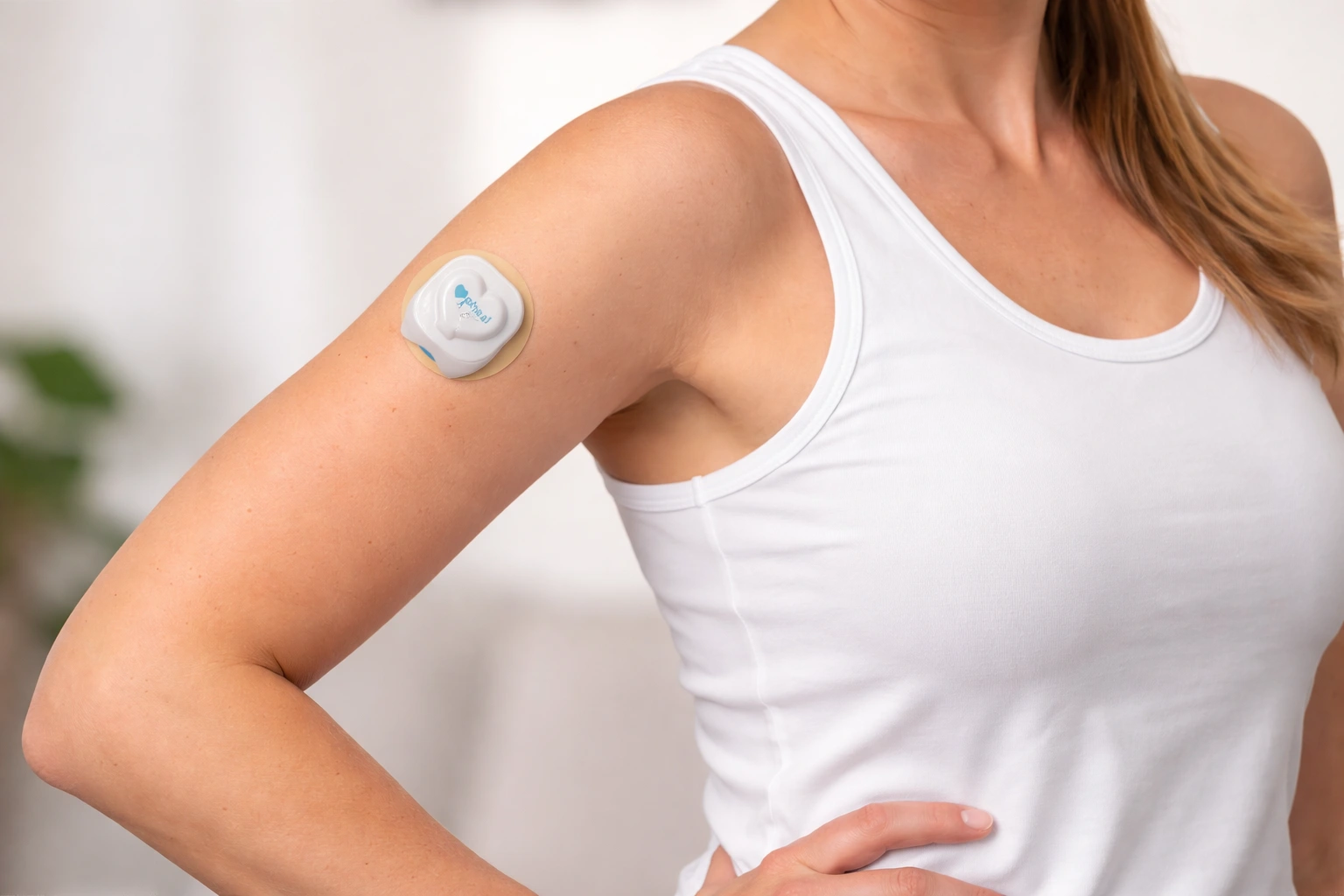
Woman wearing the pheal smart patch platform on her upper arm.

FROM BENCH TO WEARABLE EXPERIMENT

Change the sensor.
Keep the setup.

A card-based system gives sensor developers a route into skin-worn, initially sweat-facing experiments. Iterate the chemistry or electrode design without rebuilding the entire wearable geometry.

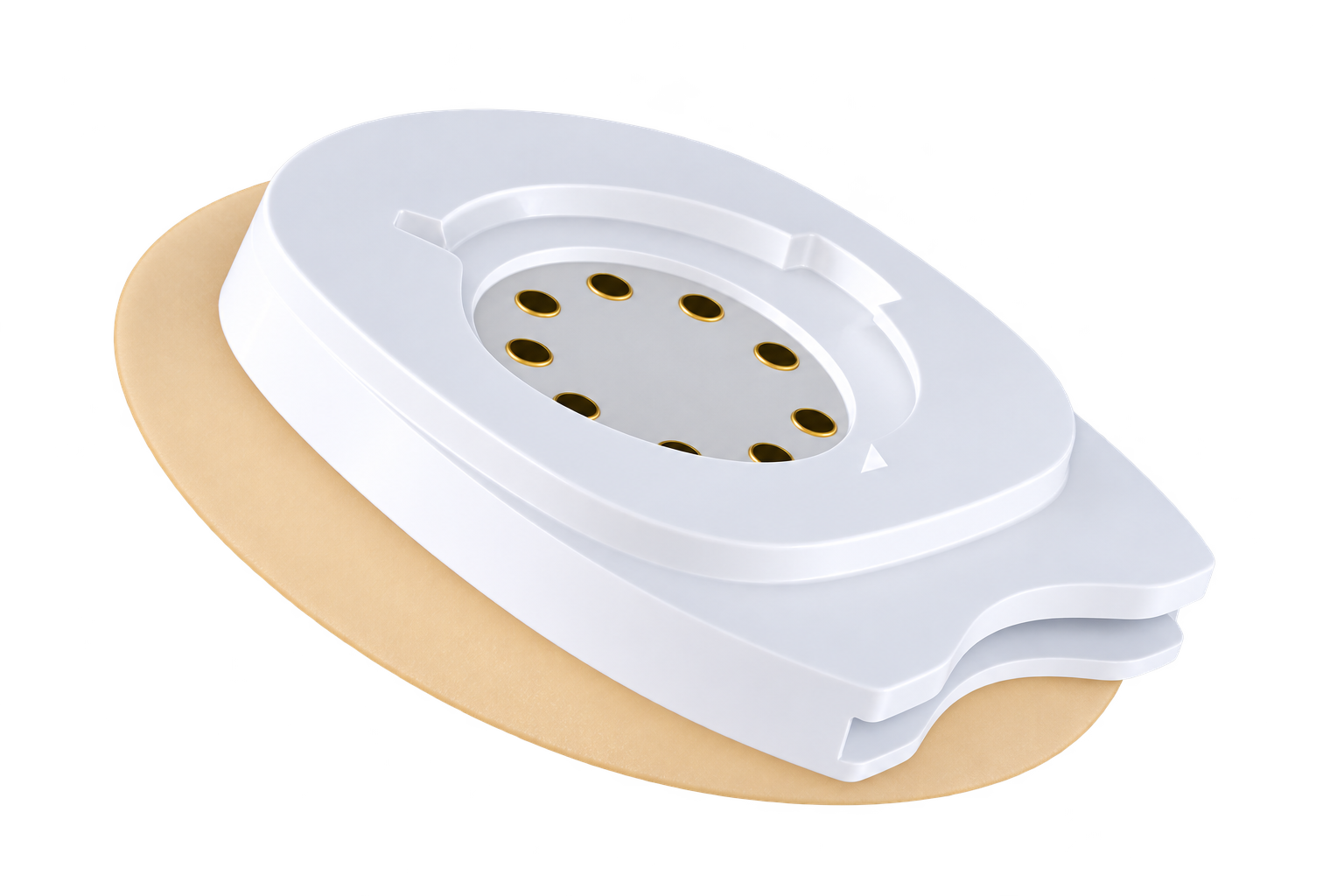
pheal insights. reusable Holder illustration

Reusable Holder

The reusable holder connects the Sensor Card with the measurement setup and the skin-contact layer. The Underlay Patch is a replaceable, single-use component that transports sweat to the sensing area. It must be replaced before each new participant test, while the holder remains in use.

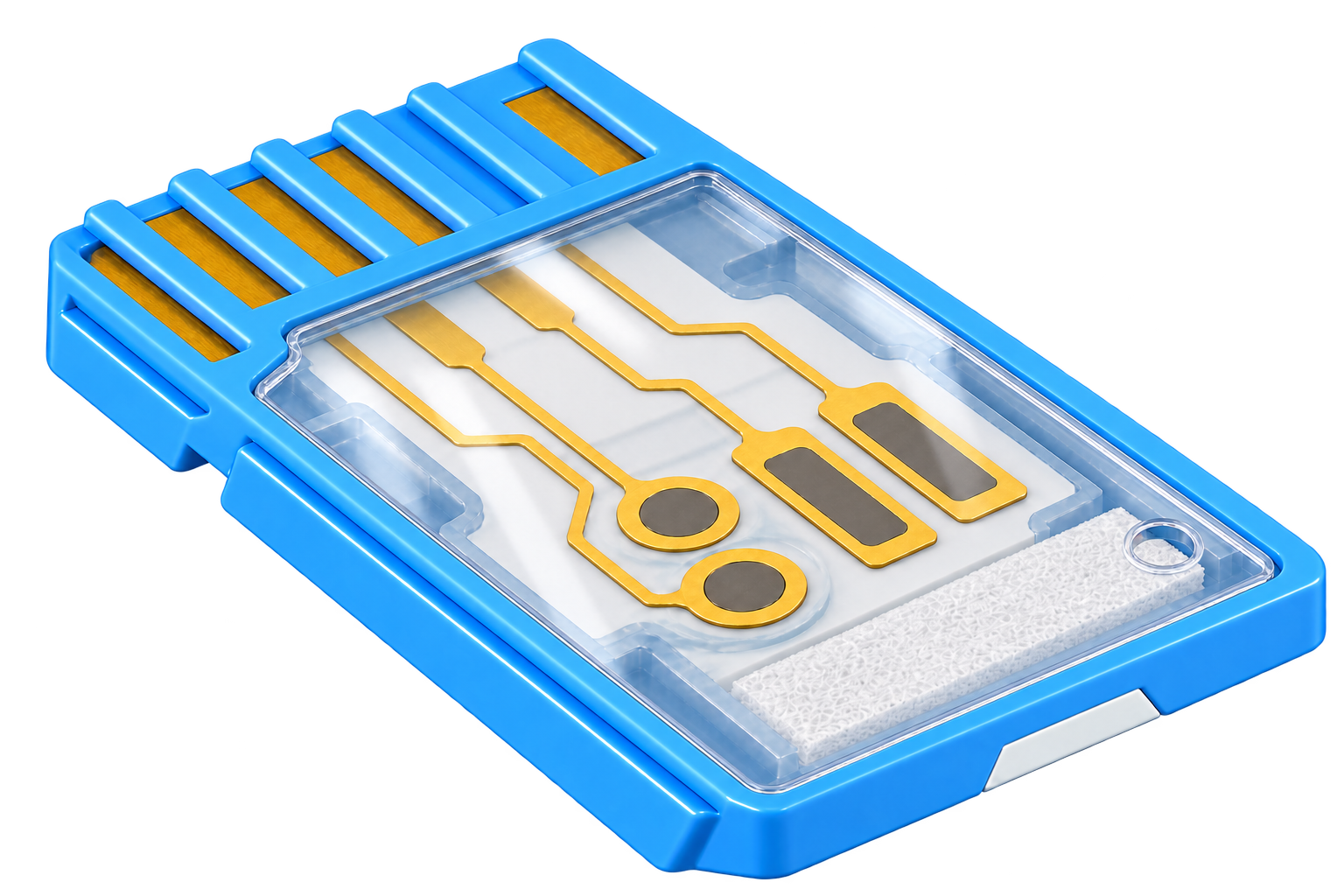
pheal insights. exchangeable Sensor Card illustration

Exchangeable Sensor Cards

An SD-card-style insertion mechanism supports changing the sensing card. It is not a standard digital memory card.

THE COMPLETE SETUP

Four parts. One research workflow.

01

Holder

A reusable structure for the skin-worn test geometry.

02

Sensor Card

An exchangeable card carrying the electrodes or sensors under investigation.

03

Underlay Patch

A replaceable skin-contact layer for the wearable experiment.

04

PalmSens Sensit Wearable

The electrochemical evaluation module. Measurement hardware supplied by PalmSens.

SENSOR INTEGRATION

Your chemistry.
An exchangeable Sensor Card.

Integrate a suitable biosensor on a Sensor Card, insert it into the Holder and evaluate its response in a wearable geometry.

Sensing surface

The electrode layout and sensing chemistry define which marker the experiment can investigate.

Sweat absorber

An absorber layer supports sample collection and delivery within the sweat-facing geometry.

Cover and sample inlet

The cover and inlet form the interface for the intended sample path. The arrangement is matched to the study.

pheal insights. Sensor Card with sensing surface, absorber layer and sample inlet
Illustrative Sensor Card configuration. Layer arrangement and chemistry depend on the selected setup.

TWO WORKING ELECTRODES

Study two responses in parallel.

The PalmSens Sensit Wearable uses two working electrodes with a shared reference and counter electrode. In Bipotentiostat mode, suitable techniques such as chronoamperometry can record both working electrodes simultaneously.

Glucose and lactate are example research targets for suitable sensing chemistries. The actual analytes, card configuration and protocol are agreed for the project.

Parallel Bipotentiostat operation is technique-dependent. It does not apply to OCP or EIS.

SENSOR CARD OPTIONS

Start where your sensor is.

BLANK

Build your own sensing layer.

Blank Sensor Cards for integration of your own sensor concept, subject to technical compatibility.

GOLD ELECTRODES

Focus on the surface chemistry.

Sensor Cards with gold electrodes as a starting point for suitable experimental designs.

PREDEFINED SENSORS

Discuss a tailored starting point.

Cards with predefined sensors can be discussed according to the project and availability.

MEASUREMENT & CONNECTIVITY

One measuring device.
Different sensor cards.

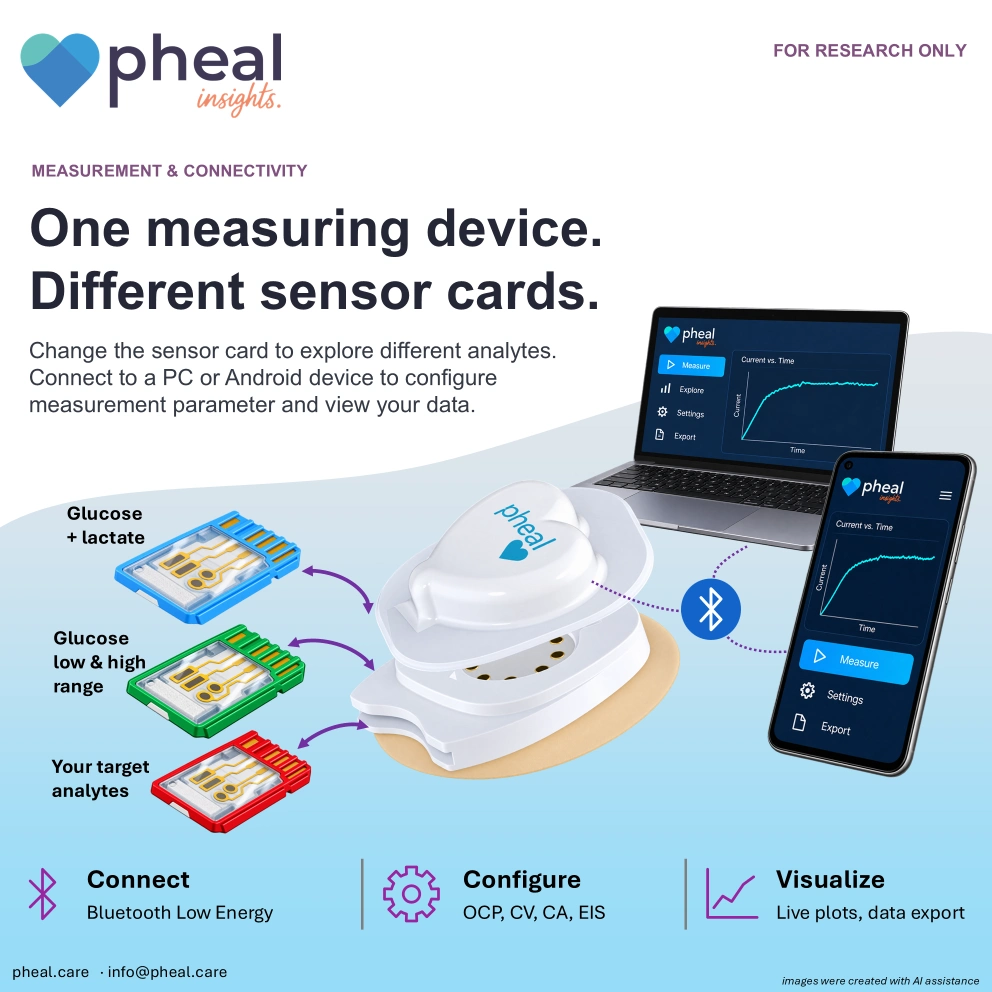
Change the sensing card as your experiment evolves. Use the supported PalmSens PC or Android software to configure a suitable measurement and review the resulting data.

Illustrative pheal insights. Sensor Cards and wearable connected to PC and smartphone
Illustrative app views and example sensor chemistries. Screens do not represent a released pheal software interface.

01 / CONNECT

Connect your setup.

Use Bluetooth Low Energy or USB-C as supported by the measurement setup and software.

02 / CONFIGURE

Choose the experiment.

Set parameters for a supported technique, such as OCP, cyclic voltammetry or chronoamperometry. Available combinations depend on the mode.

03 / EXPLORE

Review and export.

Inspect measurement plots and export data for further analysis using the supported software.

TECHNICAL OVERVIEW

Know the readout.
Define the sensor performance.

The following specifications describe the PalmSens Sensit Wearable measurement electronics. They do not specify the detection limit, concentration range or accuracy of a complete biosensor.

Electrode interface

2 working electrodes, 1 reference electrode, 1 counter electrode

DC potential range

−1.7 to +2.0 V; operating limits depend on the measurement mode

Maximum current

±3 mA

Current resolution

0.006% of the selected current range; 5.5 pA on the 100 nA range

Connectivity

USB-C and Bluetooth 5.0 Low Energy

Battery

Rechargeable, 50 mAh; runtime depends on the measurement script

Manufacturer specifications, checked against PalmSens on 26 October 2026. Current resolution is not the same as current accuracy.

Full PalmSens instrument specifications ↗

SENSOR PERFORMANCE

Specified per chemistry.

The concentration range, detection limit, selectivity and stability are established for the selected sensor and protocol. No universal Sensor Card detection limit is implied.

CARD OPTIONS

Choose a starting point.

Blank cards, cards with gold electrodes and agreed predefined sensor configurations remain the available starting points. Contact pheal for compatibility and availability.

FROM SENSOR PERFORMANCE TO WEARABLE EVIDENCE

Design the experiment
around the whole system.

A promising signal on the bench is a starting point. A wearable study also has to consider sample access, the electrode interface, mechanical contact, motion, temperature and the measurement protocol.

01 / SENSOR

Establish the response.

Define the target marker, chemistry, calibration approach and expected interferences.

02 / SYSTEM

Test the interfaces.

Review how the Sensor Card, Holder, Underlay Patch and electrochemical readout work together in the planned setup.

03 / WEAR

Learn under relevant conditions.

Evaluate the signal alongside contact, comfort and sample availability, then use the findings to guide the next sensor iteration.

insights. provides a dedicated Holder and Sensor Card architecture for research. The measurement setup and protocol are selected for the sensor and study.


LET’S BUILD WHAT COMES NEXT

Build your next wearable biosensor study.

Tell us about your target marker, electrode design, study conditions and intended measurement method.